
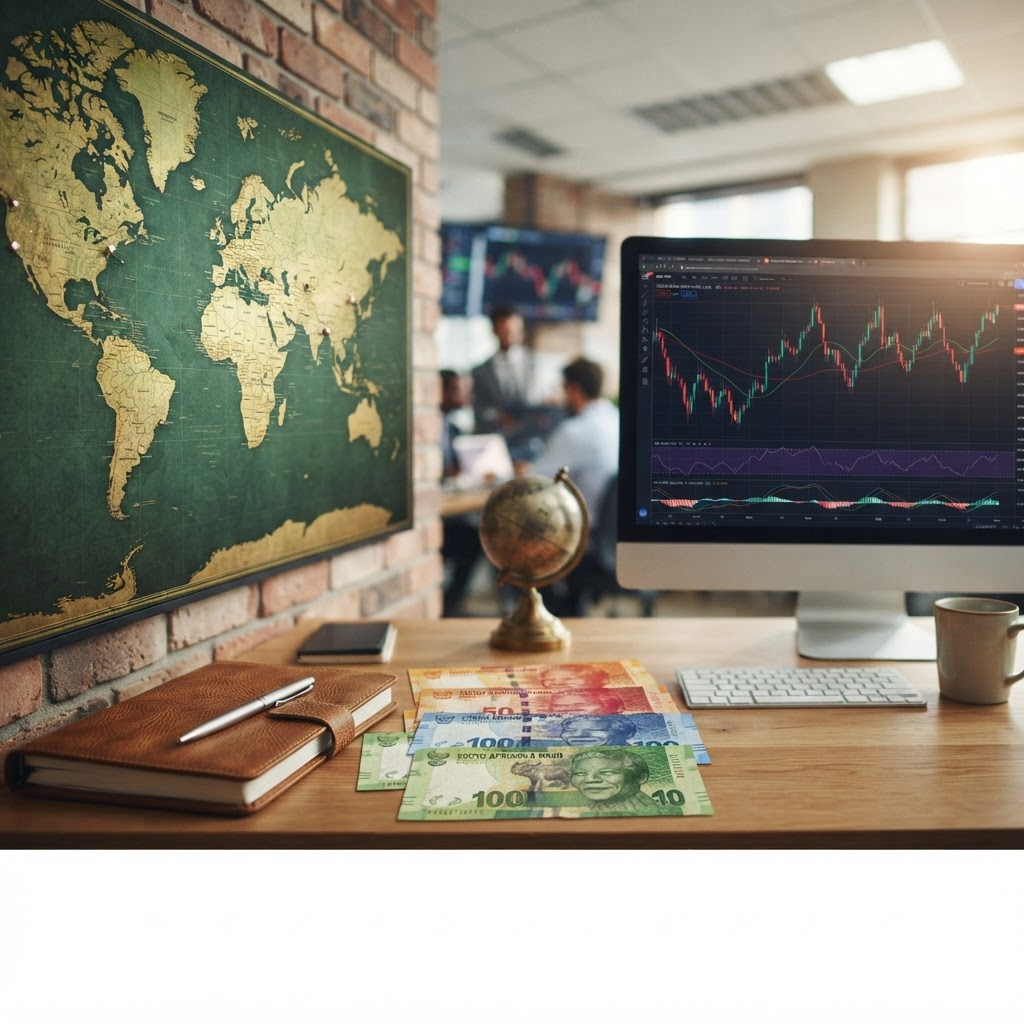
Understanding the Fundamentals of the Forex Market in South Africa
Before risking a single Rand, a solid foundational knowledge is non-negotiable. The forex market is not a get-rich-quick scheme; it is a complex financial ecosystem. Understanding its core components is the first and most critical step towards becoming a successful trader. This section will demystify the forex market, explain its mechanics, and clarify the legal landscape for forex trading sa.What Is Forex Trading?
Forex, an abbreviation of foreign exchange, is the largest and most liquid financial market in the world, with trillions of dollars traded daily. At its core, forex trading is the act of simultaneously buying one currency while selling another. Currencies are traded in pairs, such as the Euro and the US Dollar (EUR/USD). The value of one currency is determined by its comparison to another. Traders speculate on the future direction of these exchange rates, aiming to profit from the fluctuations. For example, if you believe the Euro will strengthen against the US Dollar, you would buy the EUR/USD pair. If the exchange rate moves in your favour, you can sell the pair at a higher price, realizing a profit. This decentralized, over-the-counter (OTC) market operates 24 hours a day, five days a week, across major financial centres globally, making it highly accessible for traders in the South African time zone.How Does Forex Trading Work in South Africa?
The process of forex trading in South Africa is facilitated by forex brokers South Africa. These firms act as intermediaries, providing individual traders with access to the global interbank market through sophisticated forex trading platforms. Here's a simplified breakdown of the process:- Access: A South African trader cannot directly access the interbank market. They must open a forex trading account South Africa with a licensed broker.
- Platforms: The broker provides a trading platform, such as the globally recognized MetaTrader 4 South Africa or MetaTrader 5 South Africa. This software is where traders analyse charts, place orders, and manage their positions.
- Leverage: Brokers offer leverage, which allows traders to control a large position with a relatively small amount of capital. For example, with 1:100 leverage, a trader can control a $100,000 position with just $1,000 in their account. While leverage can amplify profits, it equally magnifies losses, making risk management in forex paramount.
- Execution: When a trader decides to buy or sell a currency pair, they place an order on their trading platform. The broker executes this order, either by passing it on to a liquidity provider or by acting as the counterparty to the trade.
- Profit/Loss: The position remains open, and its value fluctuates with the market. The trader can close the position at any time. The difference between the opening price and the closing price determines the profit or loss, which is then credited to or debited from their trading account.
Is Forex Trading Legal in South Africa? The Critical Role of the FSCA
A frequently asked question is: is forex trading legal in South Africa? The answer is unequivocally yes. Online trading of forex and CFDs is completely legal and is regulated by a robust authority, the Financial Sector Conduct Authority (FSCA). The FSCA is the primary regulatory body for all financial services in South Africa, including licensed forex brokers South Africa. Its mandate is to protect consumers of financial products, promote fair treatment, and enhance the efficiency and integrity of financial markets. Choosing one of the FSCA regulated brokers is not just a recommendation; it is an absolute necessity for safe and legit forex brokers South Africa. An FSCA license ensures that a broker adheres to strict standards, including:- Segregated Client Funds: Client funds must be held in separate bank accounts from the broker's operational funds. This protects your capital in the unfortunate event of the broker's insolvency.
- Fair Trading Practices: The FSCA monitors brokers to ensure they provide transparent pricing and fair trade execution.
- Capital Adequacy: Brokers must maintain a minimum level of capital to demonstrate financial stability.
- Dispute Resolution: The FSCA provides a framework for resolving disputes between traders and brokers.
Getting Started: How to Start Forex Trading in South Africa
Embarking on your forex trading journey requires a structured approach. Following a clear, step-by-step process will build a strong foundation and increase your chances of long-term success. This section outlines the practical path for forex trading for beginners South Africa.Step 1: Building Your Knowledge Base with Forex Education South Africa
Before you even think about choosing a broker or downloading a platform, you must invest in your education. The market rewards knowledge and punishes ignorance. Fortunately, there is a wealth of resources available.- Forex Trading Course South Africa: Enrolling in a structured course, whether online or in-person, can be highly beneficial. A good course will cover everything from basic terminology to advanced technical and fundamental analysis, as well as crucial aspects of trading psychology and risk management in forex.
- Learn Forex Trading in South Africa Online: Many reputable brokers and independent educational websites offer extensive learning centres. Look for resources that provide forex trading tutorials South Africa, video guides, webinars, and detailed articles.
- Free Forex Course South Africa: While paid courses often offer more structure and mentorship, there are excellent free resources available. Websites like Babypips.com offer a comprehensive "school" for beginners. Many top brokers also provide extensive free forex education South Africa to their clients.
- Demo Accounts: Almost all forex brokers South Africa offer free demo accounts. These accounts are funded with virtual money, allowing you to practice placing trades, testing strategies, and familiarizing yourself with a forex trading platform without risking real capital. It is an indispensable learning tool.
Step 2: Choosing the Best Forex Broker in South Africa
Your broker is your primary partner in your trading career. The choice of broker can significantly impact your trading costs, execution quality, and overall experience. When searching for the best forex broker in South Africa, consider the following criteria:- FSCA Regulation: As emphasized earlier, this is the most important factor. Never compromise on regulation.
- Trading Costs: Brokers make money through spreads (the difference between the buy and sell price) and/or commissions. Look for brokers with competitive, transparent fee structures.
- Trading Platforms: Ensure the broker offers stable and user-friendly platforms like MetaTrader 4 South Africa or MetaTrader 5 South Africa. The availability of a good mobile forex trading app is also crucial for trading on the go.
- Account Types: Brokers typically offer different account types (Standard, ECN, Micro) to suit different trading styles and capital levels.
- Customer Support: Reliable and responsive customer support, preferably with a local South African presence, is vital for resolving any issues quickly.
- Deposit and Withdrawal Methods: The broker should offer convenient and low-cost funding methods for South Africans, such as local bank transfers (EFT), credit/debit cards, and popular e-wallets.
- Tradable Instruments: Beyond major currency pairs, you might want to trade minor and exotic pairs (like the USD/ZAR), or even other CFDs like indices, commodities, and stocks.
Step 3: Opening and Funding Your Forex Trading Account
Once you have selected a broker, the process of opening a forex trading account South Africa is straightforward.- Application: You will need to fill out an online application form on the broker's website. This involves providing personal details, contact information, and some financial information (like your estimated income and net worth).
- Verification (KYC): To comply with anti-money laundering regulations, all FSCA regulated brokers must verify your identity and address. This is known as the Know Your Customer (KYC) process. You will typically need to upload a copy of your South African ID or passport and a recent proof of address (like a utility bill or bank statement).
- Funding: After your account is verified, you can fund it. Choose your preferred deposit method from the options provided by the broker. When considering how much to start forex trading, it is wise to begin with capital you are fully prepared to lose. While some brokers allow deposits as low as $5-$10, a more realistic starting capital to manage risk effectively would be a few hundred dollars.
Step 4: Mastering Forex Trading Platforms
With your account funded, it's time to download the trading platform. The platform is your command centre. Spend ample time on a demo account learning its features: how to open, modify, and close trades; how to apply forex indicators to your charts; how to set Stop Loss and Take Profit orders; and how to analyse different timeframes. The better you know your platform, the more efficiently you can execute your strategy.A Deep Dive into Forex Brokers South Africa
The selection of a broker is one of the most critical decisions a trader will make. The South African market is served by a large number of international brokers, many of whom have sought and obtained FSCA regulation to demonstrate their commitment to the local market. Below, we provide an overview of some of the prominent forex brokers South Africa that traders frequently consider.Why Choosing an FSCA Regulated Broker is Non-Negotiable
Before we review specific brokers, it's essential to reiterate the dangers of unregulated entities and forex scams South Africa. Scammers often promise unrealistic, guaranteed returns and use high-pressure sales tactics. They may operate from offshore locations with little or no oversight. Red flags include:- Promises of "no risk" or guaranteed profits.
- Lack of a verifiable FSCA license.
- Difficulty with withdrawals.
- Aggressive marketing and unsolicited contact.
Comparing Top Forex Brokers for South African Traders
This section provides a brief overview of several brokers popular in the South African market. This is not an endorsement but a comparative look to aid your own research.Exness South Africa
Exness South Africa is well-regarded for its excellent trading conditions. They are known for offering unlimited leverage on some account types (under specific conditions), extremely fast withdrawal processing (often instant), and very low spreads. Exness provides both MT4 and MT5 platforms and caters to both beginners and professional traders with a variety of account options. Their transparency regarding pricing and execution statistics is a significant plus.
HFM South Africa (formerly HotForex South Africa)
HFM South Africa (previously known as HotForex South Africa) is a globally recognized brand with a strong presence in the region. They are an FSCA-regulated broker offering a wide range of account types, including Micro accounts for beginners and Zero Spread accounts for scalpers. HFM provides a comprehensive suite of trading tools, extensive educational materials, and promotions. They support both MT4 and MT5 platforms and offer over 1000 tradable instruments.
XM Forex Broker South Africa
XM forex broker South Africa is another major international broker with FSCA regulation. XM is particularly known for its strong focus on forex education South Africa, offering daily webinars, seminars, and tutorials. They have a reputation for excellent customer service and a user-friendly approach, making them a popular choice for those new to forex trading. They offer a low minimum deposit and a choice of MT4 and MT5 platforms.
FBS South Africa
FBS South Africa appeals to traders with its high leverage options, a wide variety of account types, and frequent promotions and bonuses. They are an FSCA-regulated entity in South Africa. FBS supports MT4 and MT5, as well as their proprietary FBS Trader app. They offer accounts with very low minimum deposits, making them accessible for traders who want to start small.
IC Markets South Africa
IC Markets South Africa is highly favoured by high-volume traders, scalpers, and those who use automated trading systems (expert advisor South Africa). They are known for their "True ECN" environment, which provides some of the tightest spreads in the industry and lightning-fast execution speeds. IC Markets offers MT4, MT5, and cTrader platforms, providing a robust environment for serious traders.
AvaTrade South Africa
AvaTrade South Africa is a well-established and highly regulated broker globally, including with the FSCA. They offer a wide range of trading platforms for beginners and professionals, including MT4, MT5, and their proprietary AvaTradeGo mobile forex trading app. AvaTrade is also known for its innovative risk management tool, AvaProtect, and a broad selection of tradable assets, including binary options South Africa (via AvaOptions).
FXTM South Africa
FXTM South Africa (ForexTime) is a global brand with a strong educational focus. They offer a variety of account types tailored to different experience levels, from standard accounts to ECN accounts for professionals. FXTM provides comprehensive market analysis, educational resources, and both MT4 and MT5 platforms. Their transparent performance statistics for order execution are a notable feature.
Pepperstone South Africa
Pepperstone South Africa is another top-tier broker renowned for its fast execution speeds and low-cost trading environment. Regulated by the FSCA, they are a favourite among experienced traders and those who use algorithms. Pepperstone offers MT4, MT5, and cTrader, and their Razor account provides raw spreads with a small commission, making it highly competitive for active traders.
OctaFX South Africa
OctaFX South Africa is a popular choice known for its user-friendly platform, competitive spreads, and copy trading feature. The copy trading service allows novice traders to automatically copy the trades of more experienced ones, offering a pathway to learn and potentially profit. OctaFX is regulated by the FSCA and supports both MT4 and MT5 platforms.
Globex360 Review
Globex360 is a South African-based broker, regulated by the FSCA. Being local, they have a deep understanding of the needs of South African traders, often offering excellent local support and convenient ZAR-based accounts. A full Globex360 review would highlight their MT4 platform offering and their focus on providing educational resources for the local community. Accessing the platform is done via a Globex360 login on their official website.
Mastering Forex Trading Platforms: Your Gateway to the Market
The forex trading platform is the software that connects you to the market. It is your portal for analysis, execution, and account management. While brokers may offer various options, the MetaTrader suite dominates the industry.The Global Standard: MetaTrader 4 South Africa (MT4)
MetaTrader 4 South Africa (MT4) is arguably the most popular trading platform in the world, and for good reason. Despite being released in 2005, its combination of powerful features and user-friendliness has cemented its place as the industry benchmark.- User Interface: MT4 has an intuitive interface that is relatively easy for beginners to grasp but contains enough advanced features for professionals.
- Charting Tools: It offers robust charting capabilities with multiple timeframes, various chart types, and a vast array of built-in technical forex indicators.
- Automated Trading: MT4 is renowned for its support for automated forex trading through Expert Advisors (EAs). A forex EA South Africa is a program that can automatically execute trades based on a pre-defined strategy.
- Customization: The platform is highly customizable, with thousands of custom indicators, scripts, and EAs available on the MQL4 marketplace.
- MT4 Download South Africa: A simple search for MT4 download South Africa will lead you to your chosen broker's website, where you can download their branded version of the platform for free.
The Next Generation: MetaTrader 5 South Africa (MT5)
MetaTrader 5 South Africa (MT5) is the successor to MT4. While it has not fully replaced its older sibling in popularity, it offers several significant upgrades.- More Instruments: MT5 was designed as a multi-asset platform, allowing for trading not only in forex and CFDs but also in centralized markets for stocks and commodities.
- Additional Timeframes and Indicators: MT5 offers 21 timeframes compared to MT4's 9, and has more built-in technical indicators.
- Economic Calendar: A built-in economic calendar helps traders stay on top of important news events that can impact the market.
- Advanced Order Types: It includes more pending order types, giving traders greater flexibility in their trade execution.
- Improved Programming Language: MQL5 is a more advanced programming language than MQL4, allowing for the creation of more complex EAs and indicators.
The Rise of Mobile Forex Trading: Best Forex Trading App South Africa
In today's fast-paced world, the ability to trade on the go is essential. The best forex trading app South Africa allows you to manage your positions, analyse charts, and even open new trades from anywhere with an internet connection. Most top brokers, including those mentioned above, offer a proprietary mobile forex trading app or fully functional mobile versions of MT4 and MT5 for both Android and iOS. A good forex trading app should be stable, secure, and offer most of the core functionalities of the desktop platform, including charting, a range of order types, and access to account history.Other Trading Platforms for Beginners and Pros
While MetaTrader is the dominant force, some brokers offer alternatives:- cTrader: A platform known for its modern interface and advanced order capabilities, often favoured by ECN brokers for its suitability for high-speed trading.
- Proprietary Platforms: Some brokers invest in developing their own unique platforms, often with a focus on being more user-friendly trading platforms for beginners or integrating unique features like social trading or advanced risk management tools.
Developing Your Edge: Forex Trading Strategies and Analysis
Once you are set up with a broker and platform, the real work begins: developing a profitable trading strategy. A strategy is a defined set of rules that governs your trading decisions, from entry to exit. It removes emotion and guesswork, promoting disciplined trading.The Two Pillars of Forex Analysis South Africa
Your trading strategy will be built upon one or both of the two main schools of market analysis.Fundamental Analysis
This involves assessing a currency's value based on economic, social, and political factors. A fundamental analyst will study economic data like interest rates, inflation, GDP growth, and employment figures. For example, if the South African Reserve Bank (SARB) raises interest rates, this can make the Rand (ZAR) more attractive to foreign investors, potentially causing its value to rise.
Technical Analysis
This approach ignores the "why" behind price movements and focuses solely on price action itself. Technical analysts use price charts and forex indicators to identify patterns, trends, and key support/resistance levels. The core belief is that all known fundamental information is already reflected in the price.
Essential Forex Indicators for Your Strategy
Technical indicators are mathematical calculations based on a currency pair's price, volume, or open interest. They are plotted on a chart to help traders identify signals and trends. Some common indicators include:- Moving Averages: Smooth out price data to identify the direction of the trend.
- Relative Strength Index (RSI): A momentum oscillator that measures the speed and change of price movements to identify overbought or oversold conditions.
- MACD (Moving Average Convergence Divergence): A trend-following momentum indicator that shows the relationship between two moving averages of a security’s price.
- Bollinger Bands: A volatility indicator consisting of a moving average plus two standard deviations, which helps identify periods of high or low volatility.
The Power of Price Action Forex South Africa
Price action forex South Africa is a form of technical analysis that involves reading the "raw" price chart without the use of lagging indicators. Traders focus on identifying patterns like candlestick formations (e.g., Doji, Engulfing patterns), support and resistance levels, and trend lines to make their trading decisions. Many purists believe this is the cleanest way to interpret the market's sentiment.Effective Risk Management in Forex: Your Key to Survival
No matter how good your strategy is, it will fail without proper risk management in forex. This is arguably the most important skill a trader can learn.- The 1-2% Rule: Never risk more than 1-2% of your trading capital on a single trade. This ensures that a string of losses will not wipe out your account, allowing you to stay in the game.
- Stop-Loss Orders: A stop-loss is an order you place with your broker to automatically close a trade if the market moves against you by a specified amount. It is your primary safety net.
- Position Sizing: Correctly calculating the size of your trade based on your risk percentage and stop-loss distance is crucial.
- Risk-to-Reward Ratio: Only take trades where the potential profit is significantly greater than the potential loss. A common target is a ratio of 1:2 or higher, meaning you aim to make at least twice as much as you are risking.
Advanced Forex Trading Concepts for South African Traders
Once you have mastered the basics, you can begin to explore more advanced concepts to enhance your trading efficiency and potentially your profitability.Automated Forex Trading: Expert Advisor South Africa
Automated forex trading involves using computer programs to execute trades on your behalf. The most common form of this on the MT4/MT5 platform is the Expert Advisor (EA). An expert advisor South Africa can be programmed to follow a specific trading strategy, scanning the markets 24/5 for opportunities and executing trades without any manual intervention. Pros:- Removes emotion from trading.
- Can operate 24/5, never missing a signal.
- Can backtest strategies on historical data with speed and precision.
- Requires a robust, well-tested strategy.
- Not all EAs are profitable; many sold online are scams.
- Requires a constantly running machine or a Virtual Private Server (VPS) for optimal performance.
Leveraging Forex Signals South Africa: Pros and Cons
Forex signals South Africa are trade recommendations provided by forex signal providers South Africa, who can be individual analysts, companies, or automated systems. These signals typically include the currency pair, entry price, stop-loss, and take-profit levels. Pros:- Can be a learning tool for beginners to see how professionals analyse the market.
- Can save time on market analysis.
- There is no guarantee of profitability.
- Promotes reliance on others rather than developing your own skills.
- The market is flooded with scam signal providers promising unrealistic returns. Always demand a verified track record.
The Social Side: Forex Trading Group and Mentorship
Joining a community can be a powerful catalyst for growth.- Forex Trading Group South Africa: A good trading group, whether on platforms like Telegram or a dedicated forum, can be a place to share ideas, discuss strategies, and get support from fellow traders. Be wary of groups focused on "get rich quick" schemes or pumping signals without explanation.
- Forex Traders WhatsApp Group: These can be useful for real-time discussion, but they can also be noisy and filled with bad advice. Vet any forex traders WhatsApp group carefully.
- Forex Mentorship South Africa: Finding an experienced, successful trader to act as a mentor can accelerate your learning curve dramatically. A good mentor will guide your development, review your trades, and help you build a professional trading mindset.
The Financial Realities of Forex Trading in South Africa
Trading is a business, and it's essential to understand the financial aspects, from generating income to fulfilling your legal obligations.Understanding Forex Trading Income South Africa and Realistic Expectations
Many newcomers are lured by images of lavish lifestyles and quick fortunes. The reality is that consistent forex trading income South Africa is the result of skill, patience, and discipline, not luck. It's crucial to set realistic goals. A professional trader making a consistent 3-5% return per month is considered highly successful. Aim for steady growth rather than explosive, unsustainable gains. Your income will be directly proportional to your skill and the size of your trading capital. Many of the successful forex traders in South Africa have achieved their status through years of dedicated practice and learning. While stories of the youngest forex trader in South Africa hitting it big can be inspiring, they are the exception, not the rule.Forex Withdrawal in South Africa: Getting Your Profits
The process for a forex withdrawal in South Africa is typically straightforward with a regulated broker. You will log into your client portal, select the withdrawal option, choose your method (often back to the source of deposit, like your bank account or credit card), and specify the amount. Reputable brokers process withdrawals efficiently, usually within 1-3 business days for bank transfers. Be aware of any potential withdrawal fees the broker may charge or currency conversion fees from your bank if your account is in USD.Navigating Tax on Forex Trading South Africa
Yes, profits from forex trading are taxable in South Africa. It is crucial to be compliant with the South African Revenue Service (SARS). The taxation of forex profits can be complex and typically falls into two categories:Income Tax
If you are trading frequently and it is your primary form of generating income, SARS will likely view your profits as regular income, taxed at your marginal income tax rate.
Capital Gains Tax (CGT)
If your trading is less frequent and considered more of an investment activity, your profits may be subject to CGT, which is generally a lower rate than income tax.
Forex vs. Other Markets: A South African Perspective
While forex is a massive market, it's not the only option for online trading south africa. Understanding how it compares to other markets can help you decide where to focus your efforts.Stock Trading vs Forex South Africa
- Stock Trading: Involves buying shares (ownership) in a publicly listed company (e.g., Naspers, Anglo American on the JSE). Your profit comes from an increase in the share price and potential dividends.
- Stock Trading vs Forex South Africa: Forex involves trading currencies. Key differences include market size (forex is much larger), leverage (typically much higher in forex), and market hours (forex is 24/5, while stock markets have fixed hours). Forex trading is often more suited to short-term strategies due to its high liquidity and volatility.
CFD Trading South Africa
CFD trading South Africa is closely related to forex. A Contract for Difference (CFD) is a derivative product that allows you to speculate on the price movement of an underlying asset without owning it. In fact, when you trade forex with most brokers, you are trading forex CFDs. The great advantage of CFDs is that they allow you to trade a huge variety of markets from a single platform, including indices (like the JSE Top 40), commodities (gold, oil), and individual stocks.Crypto vs Forex Trading
- Cryptocurrency Trading: Involves buying and selling digital currencies like Bitcoin and Ethereum.
- Crypto vs Forex Trading: The core difference is regulation and volatility. The forex market is well-established and regulated, while the crypto market is still the "Wild West" in many respects. Crypto is known for extreme volatility, offering the potential for massive gains but also catastrophic losses. Forex, while volatile, is generally more stable than the crypto market.
Forex Trading South Africa FAQs
Here are answers to some of the most frequently asked questions about forex trading sa.What is the minimum deposit required to open a forex trading account in South Africa?
The minimum deposit varies significantly between brokers. Some, like FBS, offer accounts for as little as $5. However, to practice proper risk management, a more realistic starting capital would be in the range of $200-$500 (around R3,500 - R9,000). The answer to how much to start forex trading depends on your financial situation and risk tolerance.
What are the most popular currency pairs to trade in South Africa?
South African traders actively trade the major pairs like EUR/USD, GBP/USD, and USD/JPY due to their high liquidity. Additionally, exotic pairs involving the South African Rand (ZAR) are very popular for local traders, including USD/ZAR, EUR/ZAR, and GBP/ZAR.
What are the risks of Forex trading?
The primary risk is financial loss due to market volatility and the use of leverage. Other risks include slippage (when your trade executes at a different price than intended), broker insolvency (mitigated by using FSCA regulated brokers), and emotional decision-making.
Do Forex brokers in South Africa offer demo accounts?
Yes, virtually all reputable forex brokers South Africa offer free and unlimited demo accounts. It is an essential tool for forex trading for beginners South Africa to practice and refine their strategies.
What is the best forex trading app South Africa?
The best forex trading app South Africa is subjective and depends on your needs. The mobile versions of MT4 and MT5 are excellent all-rounders. Proprietary apps from brokers like AvaTrade (AvaTradeGo) or Exness South Africa are also highly rated for their user-friendliness and features.
How do I find legit forex brokers South Africa?
The number one rule is to check for an FSCA license. Any broker that is regulated by the Financial Sector Conduct Authority is considered a legit forex brokers South Africa. You can verify their license number on the FSCA's official website.
What are binary options South Africa?
Binary options South Africa are a type of exotic option where the payoff is either a fixed monetary amount or nothing at all. It is a "yes or no" proposition on a future price. They are considered extremely high-risk, and many regulators have warned against them. Some regulated brokers like AvaTrade offer a more legitimate, exchange-traded version called Vanilla Options.